The Return of the Viceroy
Imperialism, Oil, and the Conquest of Venezuela
We must expose the material interests driving this war, challenge the racist narratives that justify it, smash the fascist ideology that feeds it, and build a movement of solidarity that recognizes that the struggle for Venezuelan sovereignty is inextricably linked to the struggle against the same forces of exploitation at home.
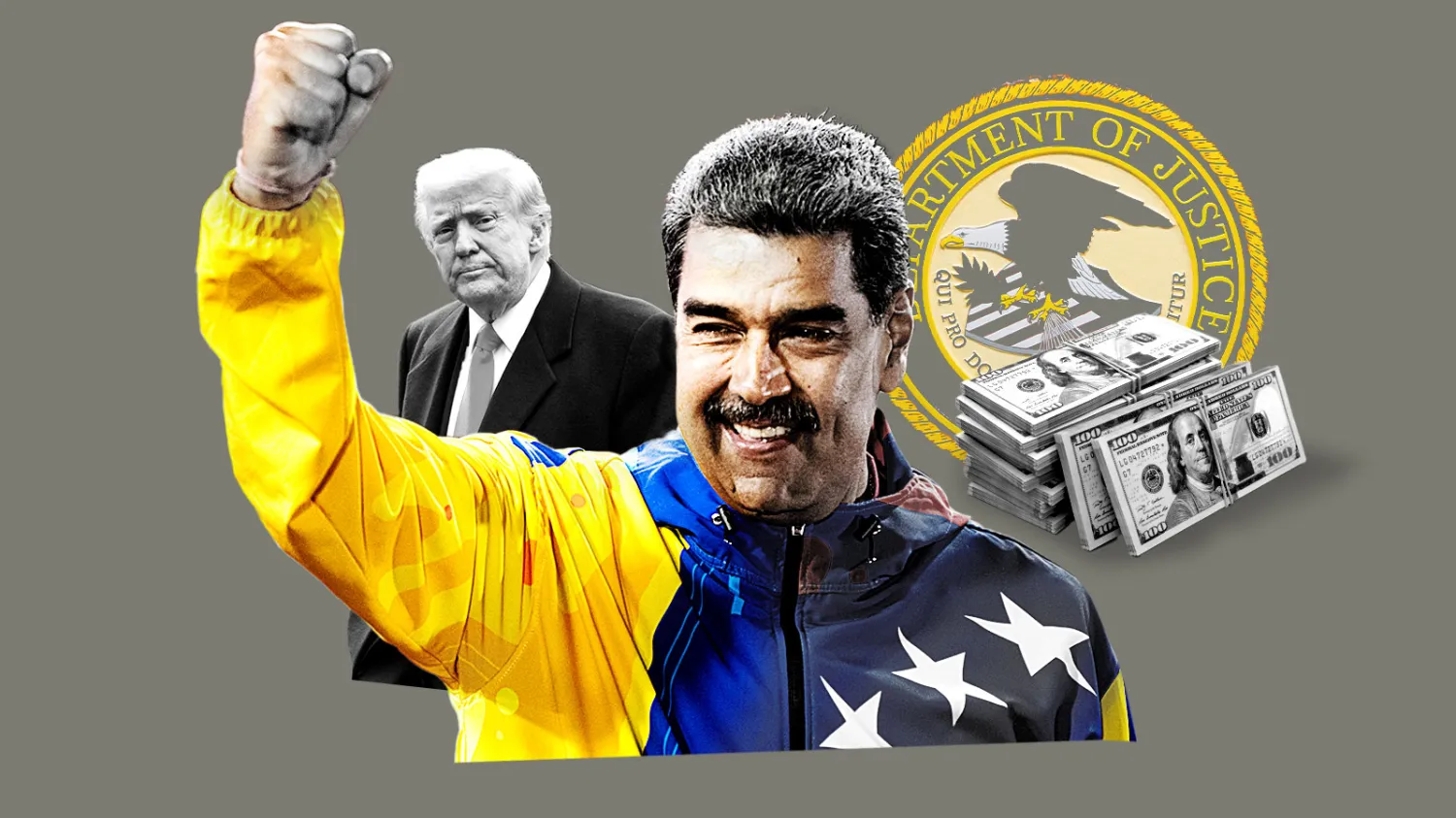
On Monday, January 5, the spectacle of imperial hubris reached its zenith in a Brooklyn courtroom, where President Nicolás Maduro was arraigned before U.S. District Judge Alvin Hellerstein. The indictment, unsealed as United States v. Nicolas Maduro Moros et al., charges the Venezuelan leader with four counts: narco-terrorism conspiracy, conspiracy to import cocaine, and two counts related to the possession and use of machine guns and destructive devices. To read the text of Indictment S4 11 Cr. 205 is to witness the weaponization of the American legal system against geopolitical rivals, a document where political sovereignty is transmuted into intoxicated racketeering. The charges rely on the fantastical premise that the Venezuelan state apparatus, its military, its diplomatic corps, and its executive branch, functions not as a government but as the “Cartel of the Suns.” By framing the hierarchy of a state as the hierarchy of a gang, Washington grants itself the legal fiction necessary to bypass international immunity laws. This is juridical colonialism in its purest form where the domestic laws of the empire are expanded to encompass the entire globe, reducing a foreign head of state to the status of a common street dealer to justify his abduction.
The specific charges regarding weaponry, Counts Three and Four, alleging the “possession of machine guns and destructive devices,” reveal the Kafkaesque absurdity of the prosecution’s logic. Under the standard definitions of international law, a head of state and the Commander-in-Chief of the armed forces is legally authorized, indeed mandated, to control the national arsenal. By charging Maduro with “possessing” the weaponry of the Venezuelan National Bolivarian Armed Forces, the Southern District of New York is attempting to criminalize the very concept of national defense when exercised by a nation outside the US orbit. The indictment lists standard military equipment like AK-47s and surface-to-air missiles as “tools of the drug trade,” deliberately erasing the distinction between a sovereign military protecting its borders and a criminal syndicate enforcing turf. This legal sleight of hand asserts that because the US does not recognize the legitimacy of the Bolivarian government, its army is a gang, its taxes are extortion, and its president is a felon in possession of a firearm. It is a precedent that effectively illegalizes resistance; any leader who arms their military against imperial aggression can now be indicted for “conspiracy to possess destructive devices.”
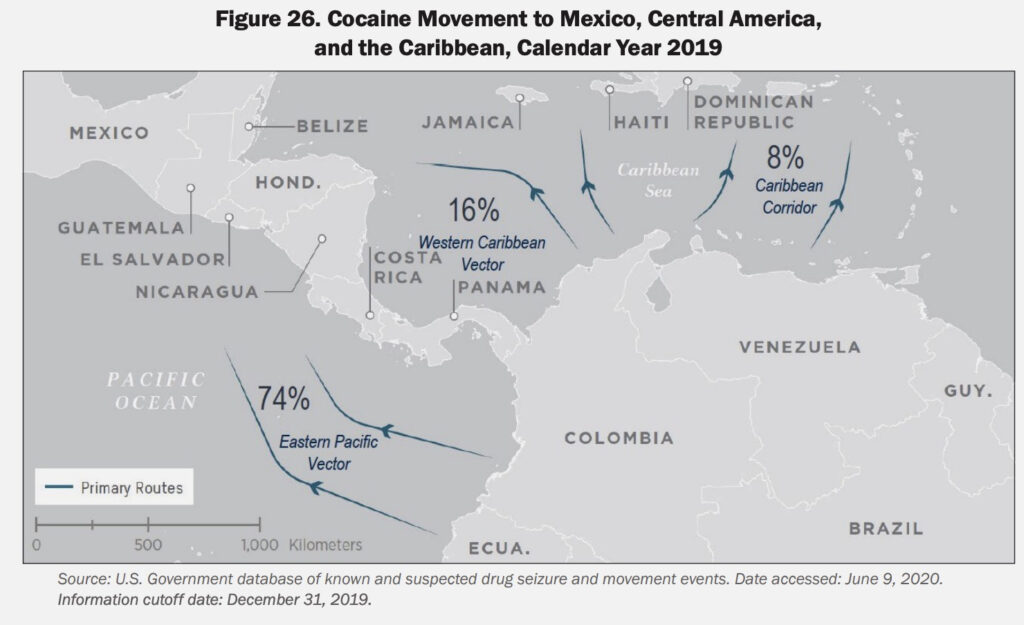
Furthermore, the timeline of the alleged conspiracy, which the indictment claims began “in or about 1999,” betrays the true political motivation behind these charges. By dating the “criminal enterprise” to the exact year Hugo Chávez took office, the Department of Justice is not prosecuting a specific crime but is attempting to retroactively criminalize the entire Bolivarian Revolution. The indictment posits that the social missions, the regional integration projects, and the reclamation of oil sovereignty were merely fronts for a twenty-five-year drug conspiracy. This revisionist history is designed to delegitimize the political agency of millions of Venezuelans, recasting their revolution as a long-con organized by drug lords. It ignores the inconvenient reality that the vast majority of cocaine entering the United States originates in Colombia, a steadfast US ally, and that the flow of narcotics has historically increased, not decreased, under the supervision of the very US agencies now framing Maduro. The charge of “narco-terrorism” acts as a rhetorical solvent, dissolving the political nature of the conflict so that the US military can intervene not as an invader, but as a global policeman serving a warrant.
Ultimately, this trial is a show trial in the strictest sense, designed not to uncover the truth but to validate the violence of the conquest. The prosecution’s reliance on the testimony of defectors and convicted traffickers, men like Cliver Alcalá or “El Pollo” Carvajal who have every incentive to perjure themselves in exchange for leniency, demonstrates the manufactured nature of the case. These charges are the bureaucratic paperwork for a hit job, a thin veneer of legality pasted over an act of piracy. By dragging Maduro into a federal court, the US seeks to humiliate a symbol of resistance and demonstrate that no one is beyond the reach of its punitive apparatus. Yet, in doing so, they have only highlighted the moral bankruptcy of a system that pardons its own war criminals while imprisoning foreign leaders who dare to assert control over their own natural resources. The verdict in Brooklyn is irrelevant; the crime was committed the moment the first US boot touched the ground in Caracas.
The events of Saturday, January 3, 2026, mark a decisive and brutal rupture in the geopolitical order of the Western Hemisphere, signaling the transition from covert destabilization to naked imperial conquest. Trump’s brazenly illegal act of war shattered the facade of international law by pillaging Caracas seizing President Nicolás Maduro and First Lady Cilia Flores, extracting them via the USS Iwo Jima, and transporting them to New York. As of this writing, the democratically elected head of a sovereign nation sits in a cell at the Metropolitan Detention Center in Brooklyn. This is not merely a violation of diplomatic norms; it is the resurrection of the gunboat diplomacy that defined the early 20th century, updated with the technological lethality of the 21st. The Trump administration has dispensed with the pretenses of supporting “local democratic actors” that characterized previous failed coup attempts. Instead, Donald Trump has declared that the United States will “run” Venezuela during a so-called transition period to ensure the oil flows, a statement that strips away any lingering illusions about humanitarian motives. While Senator Marco Rubio attempts to frame the operation as a “quarantine” or blockade to manage optics, the reality on the ground is an occupation in all but name.
This aggression violates the most basic provisions of the UN Charter, specifically Article 2(4), which prohibits “the threat or use of force against the territorial integrity or political independence of any state.” The kidnapping of a sitting head of state, the bombardment of the capital, and the declaration of a US-run transition constitute the supreme crime under international law, an unprovoked act of aggression encompassing all subsequent war crimes. Furthermore, the naval blockade and the seizure of oil resources constitute pillage and aggression under UN General Assembly Resolution 3314. The capture of the Venezuelan leadership is the culmination of a decade-long economic war, but it is also the beginning of a new, perilous phase of direct colonial administration where the mask of liberal internationalism has been torn off to reveal the raw face of resource extraction.
To understand why the United States has committed an act of war that risks igniting the entire region, one must look past the moralizing rhetoric of the State Department and examine the material reality buried beneath the soil of the Orinoco Belt. The motive for this aggression is determined exclusively by the logic of capital. Venezuela possesses roughly 300 billion barrels of proven oil reserves, the largest in the world, consisting primarily of heavy and extra-heavy crude. This specific geological endowment is of singular strategic importance to the US energy sector, which maintains a complex refinery infrastructure along the Gulf Coast specifically engineered to process heavy-sour crude. The US drive to control Venezuela is not simply a matter of acquiring “more oil” in the abstract; it is a specific industrial imperative to secure cheap, reliable feedstock for American refineries that have been starved of heavy crude inputs due to declining production in Mexico and global market shifts. The logic of empire is logistical and chemical as much as it is political. By seizing direct control of the Venezuelan state, Washington aims to smash the sovereign barriers, specifically the hydrocarbons laws established under the Bolivarian Revolution, that prevented foreign capital from booking these reserves as their own assets. The “Trump Corollary” to the Monroe Doctrine is not a diplomatic theory but a business plan: the privatization of the Orinoco reserves, the dismantling of the state-owned PDVSA, and the reintegration of Venezuela’s natural wealth into the balance sheets of ExxonMobil and Chevron. This is a war for the rate of profit, waged to resolve the internal contradictions of US energy dominance in an era of fierce global competition.
The predatory nature of this operation was stripped of all ambiguity aboard Air Force One, where Donald Trump openly admitted to coordinating the invasion not with the elected representatives of the American people, but with the executives of the oil industry. In a stunning confession of the state’s role as the executive committee of the bourgeoisie, Trump acknowledged tipping off energy CEOs before the assault, bypassing Congress entirely to ensure that the primary shareholders of this war were positioned to capitalize on the violence. The 300 billion barrels of heavy-sour crude in the Orinoco Belt represent a massive accumulation of potential constant capital. The organic composition of capital in the domestic refinery sector, specifically along the Gulf Coast, necessitates this input to stave off stagnation in capital accumulation. When the rate of profit falls, as it inevitably must under the pressure of competition and the rising organic composition of capital, the ruling class seeks to counteract this tendency through the violent cheapening of raw materials. The aggression against Venezuela is, therefore, a systemic necessity to restore the profit margins of the imperialist economy. We can express this drive mathematically where the Rate of Profit () is defined as surplus value () divided by the sum of constant capital () and variable capital (), or . By seizing the oil directly through military conquest, the empire aims to drastically reduce the cost of , thereby artificially inflating enabling a delay to the increase of exploitation of its own domestic workforce, which is already stretched to the breaking point. This is the geopolitical equivalent of a vulture hedge fund buying a company solely to gut it. A hostile takeover where the board is removed by force, the assets are stripped for parts, and the sovereign wealth is liquidated to enrich private investors while the husk is left to rot. The pretense of “national security” has evaporated, revealing the naked machinery of a hostile takeover where the US military acts as the demolition crew for private equity.
For a vulture capitalist to feast, the target must first be driven into insolvency. The “rusty, rotten” infrastructure Trump cites as the pretext for seizure is not the result of natural decay, but of a calculated strategy to devalue the asset prior to acquisition. This is petro-state necropolitics. The path to this invasion was paved by a relentless campaign of economic warfare designed to hollow out the Venezuelan state and manufacture a humanitarian crisis that could serve as a pretext for intervention. This strategy did not begin with Donald Trump but was institutionalized under the Obama administration, which in 2015 issued the executive order declaring Venezuela an “unusual and extraordinary threat to the national security” of the United States. This legal fiction provided the foundation for the escalating sanctions regime that followed, metamorphosing from targeted measures against individuals into a comprehensive blockade of the petroleum sector in 2019. These sanctions were a form of collective punishment, a medieval siege modernized with financial algorithms, designed to cut off the revenue necessary for importing food, medicine, and industrial parts. The resulting economic collapse was not an accidental byproduct of “socialist mismanagement,” as the corporate press endlessly repeats, but the intended outcome of a policy explicitly crafted to make the economy scream. By destroying the currency and strangling the productive capacity of the state, US imperialism sought to break the social contract between the Bolivarian government and its working-class base. The fact that the government survived this siege for so long, relying on the resilience of the communal structures and the loyalty of the popular sectors, is precisely why the empire concluded that only direct kinetic force could achieve its objectives. The economic war was the softening artillery barrage; the raid on Caracas was the infantry charge to finish the job.
To accept the caricature of Nicolás Maduro as a usurper requires a willful amnesia regarding his political trajectory and the democratic mandate he holds. Far from being a palace bureaucrat, Maduro’s political life was forged in the heat of the class struggle during the Fourth Republic, first as a bus driver for the Caracas Metro and then as a militant trade union leader who defied the corrupt labor aristocracy of the time. He was a founding member of the Movement for the Fifth Republic, serving as Hugo Chávez’s foreign minister for six years, where he constructed the very architecture of regional integration of ALBA-TCP, UNASUR, and the CELAC that Washington is now desperate to dismantle. His presidency was not seized but won at the ballot box, first in 2013 following Chávez’s death and again in 2018, an election boycotted by the US-backed opposition precisely because they knew they could not win a popularity contest against the PSUV machinery. In 2024 he won against the fascist PUD opposition by a stunning 8.77 points. The narrative of his unpopularity is belied by the reality of the street; despite the crushing weight of sanctions, millions of Venezuelans in the barrios and rural communes continue to mobilize in his defense, seeing in him not just a man, but a reflection of their own class power.
However, we must strip away the mystification of the state itself. A rigorous analysis demands we look critically at the nature of the “Bolivarian Revolution,” which did not dismantle the capitalist state but managed it. While the government diverted a portion of the oil rent toward social programs during the commodities boom, a necessary concession to maintain social peace, it never altered the fundamental property relations of the economy. Instead, it fostered the rise of a boliburguesía, a new faction of the capitalist class that enriched itself through state contracts, currency speculation, and corruption, often in alliance with the military high command. This became painfully evident in the Maduro administration’s Anti-Blockade Law and the pivot toward Special Economic Zones. The administration framed these draconian measures as “pragmatic survival strategies” to defeat the financial persecution of Washington. By institutionalizing secrecy in state contracts, the government sought to shield private investors from the reach of secondary US sanctions, effectively prioritizing the confidentiality of capital over the transparency owed to the people. What was presented as a defensive posture hardened into a series of anti-proletarian measures designed to prioritize the survival of the state apparatus over the living standards of the working class. This resulted in the hollowing out of PDVSA and the criminalization of labor protests, as the government courted private investment while allowing real wages to plummet.
Crucially, this survivalist logic extended to the militarization of the economy, epitomized by the creation of the Camimpeg military oil and mining company. The administration justified this reliance on the armed forces by citing their unique logistical capacity and discipline, positioning them as the primary firewall against internal sabotage and external aggression. However, by shielding and privileging the military to ensure their loyalty, Maduro revealed an increasingly paranoid reliance on the barracks rather than the mobilized power of the masses. The militant strikes in the oil sector were perceived not as legitimate labor disputes but as existential threats to a fragile state order, leading to a dynamic where the most organized sectors of the working class were bullied into submission through purges and restructuring. This betrays the class character of the state; its primary function remains the self-preservation of the specific capitalist faction it represents, not the liberation of the working class. By weakening the industrial proletariat to placate the military brass and secure the cash flow necessary to buy another day of survival, these policies deepened the very vulnerabilities that imperialism is now ruthlessly exploiting.
This internal betrayal did not pass unchallenged by the proletariat, who refused to accept the false dichotomy between submission to the empire and submission to austerity. The working class responded to the criminalization of their struggle with a wave of resistance, filing formal complaints with the International Labour Organization (ILO) through bodies like the Confederation of Workers of Venezuela (CTV) and the National Union of Workers (UNETE). They denounced a state apparatus that weaponized charges of “treason” and “inciting hatred” to prosecute legitimate trade union activities, effectively treating the defense of labor rights as an act of sabotage. This was physically manifested in the streets, where industrial workers from the state-owned steelmaker Sidor rallied at the Attorney General’s Office to demand the release of imprisoned union leaders, rejecting the state’s attempt to equate class struggle with terrorism.
Simultaneously, the ideological vanguard of the left waged a fierce battle against the legal architecture of this neoliberal drift. The Communist Party of Venezuela (PCV) and the Popular Revolutionary Alternative condemned the “Anti-Blockade Law” and the Law on Special Economic Zones as a “slap in the face” to national sovereignty, arguing that these frameworks created “autonomous republics” where capital reigns supreme over national law. Prominent Marxist economists like Pascualina Curcio warned that these zones would rely on the “deterioration in labor conditions” to guarantee profits, while grassroots collectives stripped away the government’s rhetoric, asserting that Hugo Chávez “had nothing to do” with a project designed to hand the country over to foreign investors. This principled opposition from the left demonstrates that the Venezuelan people are not passive victims, but active agents fighting a war on two fronts, against the imperialist siege from without and the capitalist capitulation from within.
This retreat into a survivalist fortress has exerted a devastating toll on the very proletariat the Bolivarian process was designed to uplift. Amnesty International paints a grim picture of this reality, with nearly 82% of the population living in poverty and a monthly minimum wage that covers less than 1% of the basic food basket, the working class is bearing the entire weight of the imperialist siege. However, this destitution is not the result of a socialist project, but of the abandonment of that project in favor of a desperate, ad-hoc war economy. By prioritizing the opacity of the Anti-Blockade Law to court foreign capital, the state has allowed the public sphere to wither; the collapse of water infrastructure and the chronic electricity blackouts, leaving 80% of the country in darkness in August, are the physical manifestations of a state apparatus that has ceased to function as a provider of social welfare and has transformed into a machinery of pure resistance.
Furthermore, the ecological devastation in the Orinoco Mining Arc and the frequent oil spills at the El Palito refinery reveal the terrible contradictions of a besieged nationalism. In its frantic attempt to secure revenue outside the US-dominated financial system, the government has accelerated an extractivist logic that ravages the land and poisons the water of Indigenous communities. This is the tragic paradox of the present moment: to defend the nation’s sovereignty against the United States, the administration has resorted to a predatory exploitation of the nation’s resources, alienating the indigenous and rural populations who are the natural defenders of the territory. The imperial blockade denies Venezuela the technology and capital to maintain its industry safely, but the state’s response, militarized extraction, reproduces the colonial violence it claims to oppose.
It is within this cauldron of scarcity and desperation that the state’s repressive turn must be contextualized. The Amnesty International reports of arbitrary detentions and the militarization of public order are not the whims of a dictator, but the spasms of a political organism fighting off a fatal infection. Facing an opposition that openly calls for invasion and utilizes the misery of the people as a weapon of regime change, the state has tightened its grip, often striking blindly. Yet, this “iron fist” strategy risks crushing the organic movements of the barrios, the trade unionists, and communal organizers who demand water, wages, and dignity, conflating legitimate class struggle with the fascist destabilization efforts of the right. By criminalizing the protest of the poor, the state risks severing the last tendon connecting it to the popular masses, leaving it isolated in the face of the coming imperial onslaught.
To comprehend the resilience of the Venezuelan people in the face of this aggression, we must strip away the distorted lens of imperial propaganda and engage in a necessary act of political transposition. Consider a reality where the United States itself successfully transitioned to a socialist economy, nationalizing its corporate giants to fund universal welfare, only to face a brutal blockade by a global capitalist alliance intent on starving it back into submission. In such a crucible, an opposition candidate funded by that foreign alliance, promising a return to stability that equates to the restoration of oligarchic rule, would be recognized immediately as a Trojan horse. The citizen suffering under the weight of sanctions does not view the agents of the sanctioning power as liberators. They view them as the domestic face of the enemy. This dynamic explains why the Venezuelan working class, despite legitimate grievances regarding bureaucratic corruption or mismanagement, refused to abandon the Bolivarian project for the neoliberal fantasy peddled by Washington. They understood that the imperfections of a besieged sovereign government are preferable to the perfect efficiency of a colonial administration. This perspective exposes the hollowness of the liberal critique, which demands that a population under siege judge their leadership by the standards of a peace that does not exist. The propaganda machine of the West functions to erase the external source of the suffering, reframing the inevitable scars of economic warfare as proof of the inherent failure of socialism. Yet for the masses on the ground, the choice was never between a benevolent democracy and a dictatorship. It was a choice between a flawed leadership that nevertheless stood as a barrier against total recolonization and a proxy force that sought to sell the country’s future to the highest bidder. The support for Maduro in the barrios was not a manifestation of blind strongman worship but a strategic defensive maneuver by a people who recognized that the freedom offered by the empire is merely the freedom to be exploited by a new set of masters.
With the path to an electoral coup blocked by this stubborn class consciousness, the empire was compelled to discard the pretense of supporting “democratic actors” and instead manufacture a pretext that would criminalize the state itself. Unable to persuade the masses to overthrow their government, Washington sought to depoliticize the conflict entirely, relying instead on the fabrication of the “narco-state” myth, a propaganda construct used to criminalize the Venezuelan leadership and bypass the sovereignty protections of the UN Charter. The indictment of Nicolás Maduro on narco-terrorism charges is a transparent projection of US domestic anxieties onto a foreign adversary, utilizing the Drug Enforcement Administration as an arm of foreign policy. The vast majority of cocaine transiting to the United States originates in Colombia and passes through territories controlled by US-allied governments, yet it is Venezuela that has been singled out as the unique locus of criminal activity. This selective criminalization transforms a political conflict between sovereign states into a police action, delegitimizing the enemy as a common criminal unworthy of diplomatic recognition. By labeling the Venezuelan government a cartel, Washington grants itself the license to kidnap foreign heads of state and try them in US courts, establishing a terrifying precedent of extraterritorial jurisdiction where US law supersedes international boundaries. This imperialist lawfare works in tandem with military aggression, creating a zone of exception in the Caribbean where the normal rules of engagement do not apply. The capture of Maduro is thus presented not as illegal aggression or a coup, but as an “arrest,” a linguistic sleight of hand that obscures the act of war behind the procedural language of law enforcement. It is a gangster logic applied to geopolitics, where the mob boss in Washington decides who sits in the presidential palace and who sits in a Brooklyn cell.
The cynicism of this “counternarcotics” crusade is absolute, stripped of even the faintest pretense of consistency. Just weeks before launching this invasion, Donald Trump signaled the true nature of imperial jurisprudence by moving to pardon Juan Orlando Hernández, the former President of Honduras and a man convicted in a US federal court of turning his nation into a “cocaine superhighway” to the north. The contrast is as grotesque as it is instructive: Hernández, who stuffed ballot boxes and militarized his country to serve US interests, is painted by the White House as a victim of a “Biden setup,” despite overwhelming evidence that he trafficked tonnage of cocaine that dwarfs even the wildest fabrications regarding the “Cartel of the Suns.” The distinction between the two men is not legal, but geopolitical. Hernández was our narco-trafficker, a compliant vassal who ensured the smooth operation of sweatshops and military bases, whereas Maduro committed the unforgivable crime of sovereignty. By pardoning a proven drug lord while kidnapping a sovereign leader on trumped-up charges, Washington admits that the War on Drugs is nothing more than a mechanism of imperial discipline, a selective weapon deployed only against those who refuse to bend the knee.
While the Trump administration puts the trigger to the head of the Venezuelan people, the ideological ammunition for this armed robbery has been stockpiled by the corporate media. The liberal establishment and major news outlets have not merely observed this crime they have acted as the direct instruments of imperialist war propaganda, sanitizing the brutality of conquest with a unified lexicon of adulation. In the immediate aftermath of the invasion, the response from the corporate press was chillingly identical, recycling a specific set of adjectives derived from White House talking points. From the Washington Post to CNN, the illegal kidnapping of a foreign president and the bombing of a capital city were hailed as “bold,” “audacious,” “stunning,” and “daring.” The Washington Post, owned by Amazon billionaire Jeff Bezos, set the tone with an editorial praising the “stunning demonstration of American resolve” and a “tactically flawless operation,” explicitly framing the violation of international law as a virtue. NPR called it “an audacious and surprising move,” while Bloomberg heralded how Trump “reshapes world order with daring Venezuela raid.”
This semantic uniformity is not accidental; it reveals the media as an integrated component of the state’s ideological apparatus, tasked with transforming a war crime into a spectacle of technical virtuosity. By focusing on the “boldness” of the raid, these outlets deliberately preempt any discussion of its legality or its colonial character, erasing the deaths of civilians and the destruction of sovereignty under a wave of nationalist applause. Furthermore, the complicity goes beyond mere cheerleading. As reported by Semafor, major outlets like the New York Times and the Washington Post were informed of the secret raid before it commenced but agreed to hold the story to protect the operation. They did not just cover the war crime; they were active accomplices in its execution. The total absence of the phrase “war crime” or references to the UN Charter in their coverage confirms that these institutions serve the class interests of the oligarchy, not the public interest of the truth. They have functioned as the public relations arm of the coup, uncritically amplifying intelligence agency narratives just as they did with the “WMDs” in Iraq, ensuring that the American public is fed a steady diet of imperialist mythology.
To fully grasp how a democratic populace acquiesces to such naked piracy, we must also interrogate the psychology of the American subject under late capitalism. The media’s fawning coverage is designed to manufacture consent where none exists, masking the deep divide between the ruling class and the people. Polling data reveals that the “audacious” invasion celebrated by the pundits is overwhelmingly rejected by the American working class. A Quinnipiac University poll found that 63 percent of voters opposed military action in Venezuela, a sentiment shared by 89 percent of Democrats and a clear majority of independents. This chasm between the bloodlust of the media and the skepticism of the public exposes the lie of “democratic” foreign policy. The average citizen, scarred by decades of endless war based on lies, recognizes the pattern of deception. However, the media functions to repress this anti-war consciousness, flooding the zone with the spectacle of power to induce a state of passive acceptance. The American subject is encouraged to dissociate, to keep their “moral self” separate from their “consumer self,” enjoying the cheap gas and plastic goods that imperialism secures while ignoring the violence required to obtain them.
However, the ascent of the Trumpian fascist aesthetic marks a shift from this neurotic repression to a perverse form of enjoyment. The American worker, increasingly alienated, stripped of agency, and humiliated by the grind of domestic neoliberalism, finds a compensatory outlet in the spectacle of absolute power projected abroad. There is a dark, vicarious thrill when Trump takes off the gloves, inflating a colonial superego that demands not merely exploitation, but the total submission of the Other to satisfy the fragile narcissism of the American self-image. Trump functions here not merely as a politician but as a symptom of a society that yearns to bypass the “red tape” of ethics and revel in the fantasy of being a tyrant. By openly stating “we are taking the oil,” he invites the subject to participate in the obscene underside of the law, to share in the forbidden pleasure of the bandit. This is the psychological wage of whiteness and empire, even if the domestic subject is exploited by the very same corporate forces, they are bribed with the fantasy of being part of the dominant predator class. The celebration of the coup in Miami and the indifference in the suburbs are manifestations of a collective drive to restore a sense of national potency through the domination of the Other, filling the void of their own alienation with the stolen sovereignty of Venezuela.
This external hunger for colonial restoration finds its precise correlative on the ground in Caracas. The imperial projection of power requires a local landing zone, a domestic proxy that shares Washington’s contempt for the racialized poor. The internal dynamic of the conflict in Venezuela cannot be understood without analyzing the profound class and racial antagonisms that define the opposition to the Bolivarian Revolution. The political movement that the US seeks to install in power represents the revanchist aspirations of a white, European-descended elite that was displaced from political dominance in 1998. This oligarchy views the ascent of the mestizo, black, and indigenous masses not just as a political defeat, but as a violation of the natural social order. Figures like María Corina Machado embody the intersection of class privilege and racial resentment, advocating for a return to the exclusionary democracy of the pre-Chávez era, where families of European descent monopolized the oil rent and the vast majority of mestizo lived in invisible squalor. Their program is one of savage neoliberalism privatization of state industries, the dismantling of social missions, and the brutal repression of the communal organizations that form the backbone of popular power. The Nobel Peace Prize recently awarded to Machado is a grotesque validation of this reactionary agenda, serving as an ideological laundering operation for imperialist violence by sanitizing a figure who has openly called for foreign military intervention against her own people. The opposition’s reliance on violence, from the guarimba street riots to the hiring of mercenaries, reflects their lack of organic support among the popular classes; unable to win power through the ballot box without US interference, they turn to force. The US invasion is, therefore, the armed wing of a white supremacist counter-revolution, intervening to restore the racial and class caste system that the Bolivarian process attempted to dismantle.
This reactionary current is not merely conservative but explicitly fascist, tracing a direct lineage to movements like Nuevo Orden, a far-right organization founded in 1974 that worshipped the authoritarianism of dictator Marcos Pérez Jiménez and maintained operational ties with the Spanish Falange and the French National Front. While Nuevo Orden formally dissolved, its ideology metastasized into the modern opposition, finding new hosts in groups like ORDEN: Movimiento Nacionalista and the violent street vanguards of Voluntad Popular. These are the forces that have historically agitated for the extermination of the political left, utilizing antisemitic tropes and anti-communist hysteria to justify the lynching of Chavistas during the violent guarimbas. It is no coincidence that María Corina Machado’s party, Vente Venezuela, has forged alliances with the genocidal Likud party in Israel and signed the Madrid Charter alongside the neo-fascist VOX party in Spain. The coup leaders currently being feted in Washington are the ideological heirs of this dark tradition, seeking to impose a racialized hierarchy through shock therapy and state terror. Their vision for Venezuela is not a liberal democracy but a Pinochet-style dystopia, where the “new order” is maintained by the suppression of the mestizo majority and the economy is built by the infrastructure of an authoritarian state.
The consequences of this occupation will extend far beyond the borders of Venezuela, signaling a new era of predatory accumulation where the US seeks to resolve its own economic decline through the direct looting of the Global South. The “transition” that Trump promises is a euphemism for the structural adjustment of the entire Venezuelan economy, a fire sale of national assets to pay off foreign creditors and enrich the occupying powers. We can expect the swift dismantling of the labor laws, land reforms, and social protections that were the hallmarks of the last two decades. The oil industry will be carved up and auctioned off, turning PDVSA from a national engine of development into a passive rent-collector for multinational corporations. This model of “reconstruction” will mirror the looting of Iraq, where the state was deconstructed to open markets for Western capital, leading to societal collapse and endemic violence. For the Venezuelan working class, this means a future of intensified exploitation, where their wages are crushed to ensure competitive export prices and their neighborhoods are policed by security forces answerable to Washington. The indigenous communities of the Wayuu, Warao, Pemon, Yanomami, and Kariña in the Amazonian Orinoco delta face an existential threat, as the drive to maximize extraction will roll over environmental protections and territorial rights. The “freedom” arriving on the decks of US aircraft carriers is the freedom of capital to pillage without restraint, secured by the suppression of any collective resistance.
The imperialist project in Venezuela ultimately reveals the terrifying trajectory of late-stage capitalism, where the boundaries between state power, corporate interest, and organized crime dissolve into a singular machinery of extraction. The Trump administration’s brazen declaration that it will “run” a sovereign nation serves as a warning to the entire Global South: sovereignty is conditional on subservience to the dictates of the market. This is the logic of a new colonialism envisioned by the architects of this coup, a world where national borders are porous to capital but militarized against people, where resources are the birthright of the strong, and where democracy is tolerated only so long as it produces the correct outcome. The capture of Maduro is a tactical victory for this dark vision, but it settles nothing regarding the fundamental contradictions that produced the crisis. The hunger for oil that drove the US to Caracas will not be sated; it will only grow more ravenous as the ecological and economic crises of the system deepen. The war for Venezuela is the opening battle of a century of resource wars, a glimpse into a future where the veneer of civilization is stripped away to reveal the raw violence of accumulation.
However, we must reject the binary choice between American imperialism and Venezuelan state capitalism. Liberation will not arrive on the back of a US Marine, nor will it be granted by a decree from Miraflores Palace. The history of Venezuela teaches us that real power resides in the streets in the spirit of the 1989 Caracazo, where the masses rose up against neoliberalism, and in the communal councils and networks of mutual aid that sustain life despite the blockade and government incompetence. The task is to build independent, anti-authoritarian power from below. We must look to the structures of survival that the working class has already built. The path forward requires the total abolition of the conditions that make Venezuela a prize to be fought over: the dismantling of the petro-state, the rejection of global financial subservience, and the socialization of resources under direct community control. Solidarity does not mean supporting a “lesser evil” government; it means aligning with the workers, the indigenous communities, and the poor who are struggling to breathe under the boot of both sanctions and state repression.
At this precise hour, as legal teams scramble in New York the facade of the “rules-based international order” lies in ruins, destroyed by its own architects. The pretense that the United States acts as a neutral arbiter of democracy has been incinerated by the reality of a resource grab so transparent that even the usual apologists struggle to cloak it in the language of virtue. The silence of the international community of the West is the silence of fear and complicity, a recognition that the leviathan recognizes no law but its own appetite. Yet, it is in the darkest moments of imperial overreach that the seeds of its undoing are often sown. The occupation of Venezuela will require a vast expenditure of blood and treasure that a polarized and decaying American republic can ill afford. It will alienate allies, galvanize rivals, and radicalize a generation across Latin America who see in the pillaging of Caracas the reflection of their own potential fate. The capture of a leader is not the conquest of a people. The spirit of independence that animated the liberators of the 19th century has not vanished; they are ready for this moment to reassert that the destiny of the continent belongs to those who live and work upon its soil, not to the pirates sent from the north. The struggle will continue, not in the kangaroo courts of New York, but in the hearts of the millions who know that dignity cannot be arrested, sovereignty cannot be stolen, and the working class is greater than any army.
History is being written in the Caribbean, and the eyes of the world act as witnesses to a crime that will define the geopolitical struggles of the coming decade. The seizure of Venezuela is a desperate gamble by a hegemonic power that can no longer compete economically on its own terms and must resort to piracy to maintain its standing. This aggression exposes the fragility of the US empire, which must now deploy carrier groups to secure resources it once controlled through simple market dominance. The resistance to this occupation will not end with the capture of the president; the Bolivarian movement was never about one man, but about the awakening of a political consciousness that cannot be easily extinguished. The communal councils, the militias, and the organized workers represent a deep infrastructure of resistance that will confront the occupation in the months and years to come. For those of us in the imperial core, the task is to shatter the consensus of silence and complicity. We must expose the material interests driving this war, challenge the racist narratives that justify it, smash the fascist ideology that feeds it, and build a movement of solidarity that recognizes that the struggle for Venezuelan sovereignty is inextricably linked to the struggle against the same forces of exploitation at home.