The Murder of Renee Nicole Good
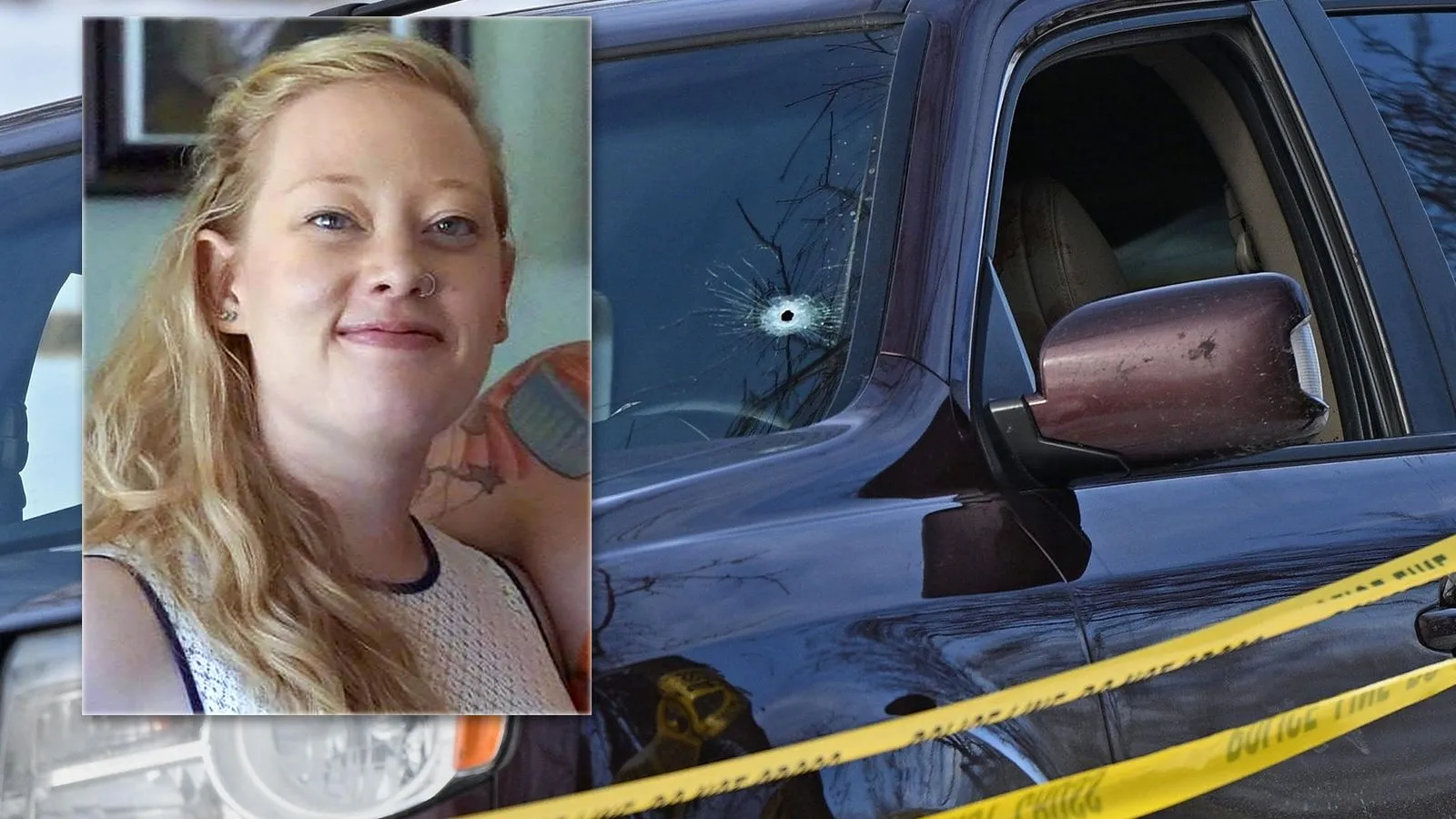
The public extrajudicial execution of Renee Nicole Good by federal agent Jonathan Ross on a grey Wednesday morning in Minneapolis was not an anomaly or a malfunction of the policing apparatus, but rather the functioning of the state exactly as designed. When an agent of Immigration and Customs Enforcement fired multiple rounds into the body of a thirty-seven-year-old poet and mother, he was not merely reacting to a chaotic situation but enacting the brutal logic of a regime that views the civilian population as enemy combatants and the streets of American cities as occupied territory. The murder of Good, and the subsequent storm of lies pouring from the Trump White House to justify it, marks a definitive point of no return in the descent of the United States into open fascist governance. This is no longer a matter of policy debate or electoral strategy, but a war declared unilaterally by the ruling class and its armed enforcers against anyone who dares to witness, let alone oppose, the machinery of ethnic cleansing.
To understand the gravity of this crime, we must first strip away the suffocating layer of state propaganda that seeks to transform a victim into a villain. The narrative constructed by the Department of Homeland Security, and amplified by the President himself, is a grotesque inversion of reality designed to obscure the nature of the violence. They claim that Good weaponized her vehicle and that the agent, a masked commando operating with the impunity of a colonial mercenary, acted in self-defense. These are not just lies; they are the standard operating procedures of a system that requires the criminalization of the dead to protect the legitimacy of the killers. A careful examination of the available video evidence and the physics of the encounter reveals the cold, hard truth of what occurred on Portland Avenue. This was not a confrontation between a law enforcement officer and a violent criminal, but the slaughter of a panicked woman by a predator seeking a trophy.
The forensic reality of the encounter entirely dismantles the official story regarding the threat she purportedly posed to the agents. Good was stopped in her maroon Honda Pilot in the road, acting as a legal observer, a role that is supposed to be protected under the nominal rights of the Constitution. The video evidence recorded by Ross himself serves as a damning indictment of his actions. It begins with Ross exiting his vehicle and approaching Good, who is sitting with her window down and her hands clearly visible. She is not aggressive; she is smiling. She greets the agent warmly, telling him that she is not mad at him. This interaction, devoid of hostility, underscores the premeditated nature of the violence that followed. Ross circles the vehicle, recording the license plate, while Good’s wife, Becca, a military veteran, films him from behind the car. There is no confusion here, only the calm before a state-manufactured storm.
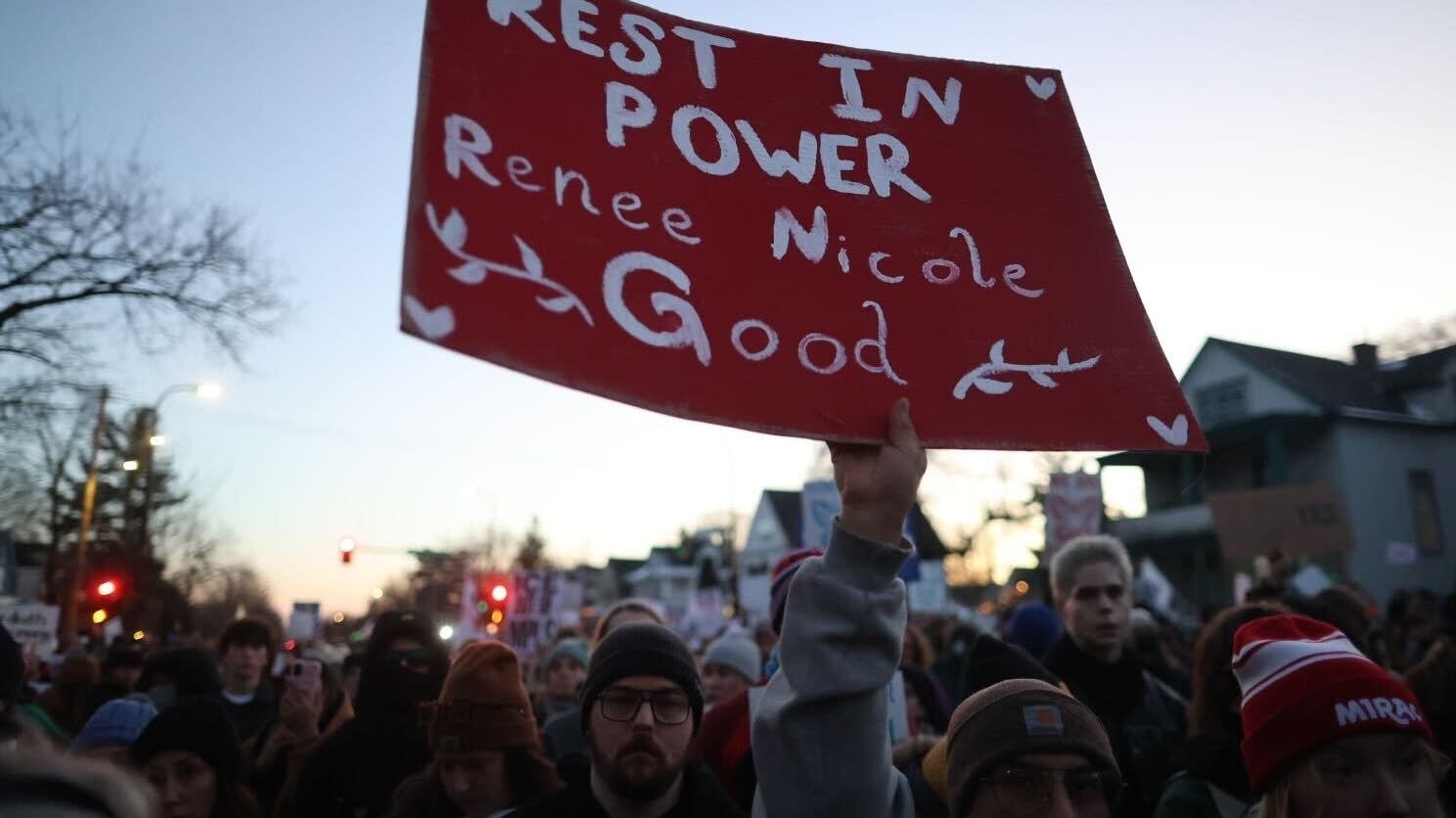
The escalation was engineered entirely by the federal agents. Approximately thirty-two seconds into the video, Ross is seen switching his cellphone from his right hand to his left hand. This was not a casual adjustment; it was a tactical preparation to clear his shooting hand for the pistol holstered on his hip. As Becca Good attempted to re-enter the passenger side, another masked agent charged the driver’s side, screaming at Renee to exit the vehicle. The sudden shift from a calm interaction to a high-decibel tactical assault triggered a predictable human response: panic. Good attempted to reverse and turn the vehicle to escape the men who had suddenly swarmed her. Ross, who had completed his circle, deliberately positioned himself in front of the vehicle’s path. He did not seek cover; he sought a justification.
It is here that the actions of Agent Jonathan Ross collide violently with the Department of Justice’s own policy on the use of deadly force. The regulations are explicit and unambiguous:
Firearms may not be discharged solely to disable moving vehicles. Specifically, firearms may not be discharged at a moving vehicle unless: (1) a person in the vehicle is threatening the officer or another person with deadly force by means other than the vehicle; or (2) the vehicle is operated in a manner that threatens to cause death or serious physical injury to the officer or others, and no other objectively reasonable means of defense appear to exist, which includes moving out of the path of the vehicle.
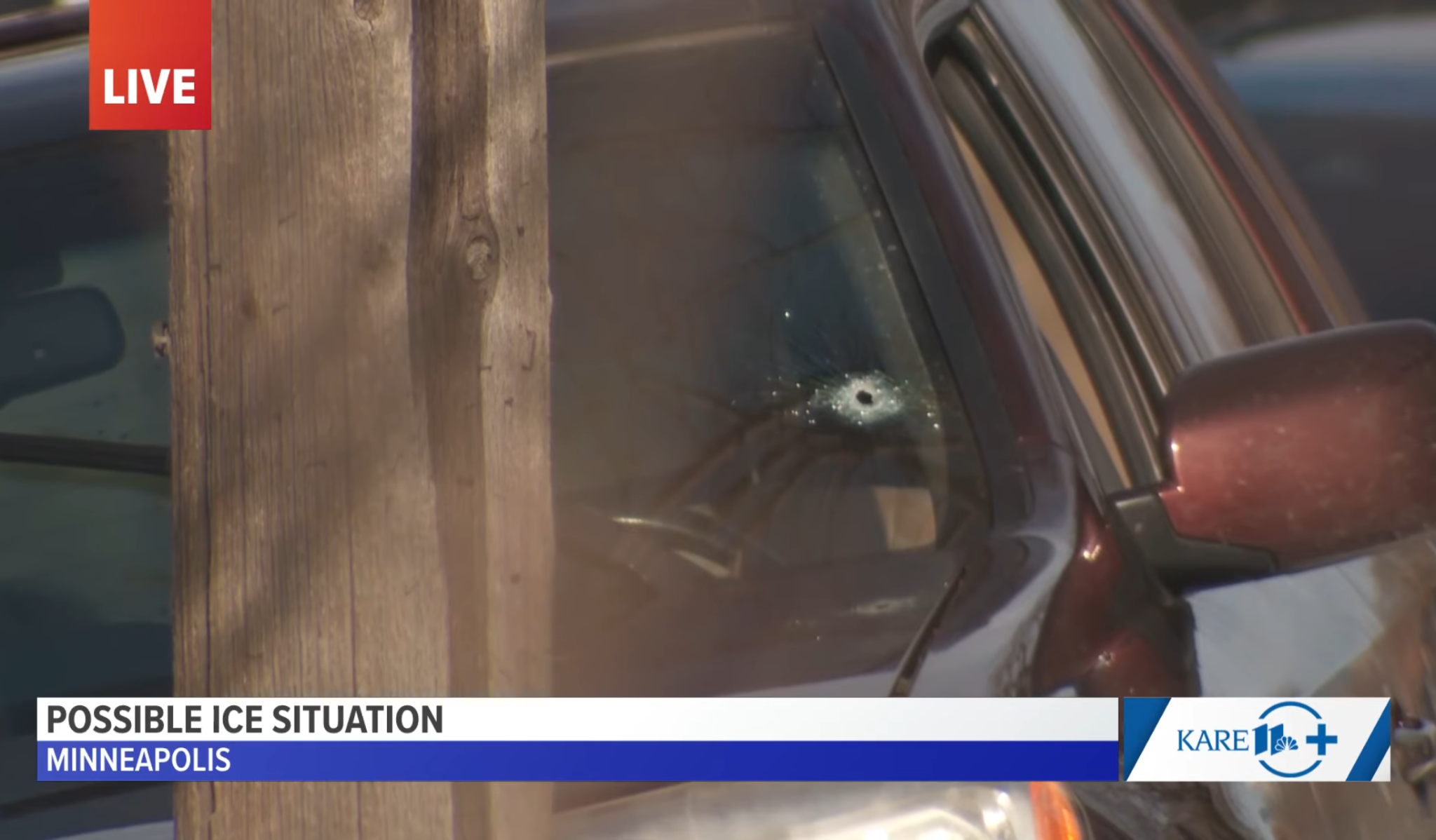
Ross violated every metric of this policy. The video confirms that the Honda was turning away from him when he fired. He was not trapped; he had ample space to step aside. Instead, he leaned onto the hood of the accelerating car, phone in one hand and gun in the other, and fired three rounds in less than a second.
The grim physics of the scene tell the final part of the story. The sudden acceleration of the SUV and its careening path into a utility pole was not the act of a driver intent on murder but the physical result of a body that had just been destroyed. When the bullets struck Renee Nicole Good in the head, her body went limp. Her foot, heavy with the dead weight of a corpse, pressed down on the accelerator. The vehicle became a projectile not because of her malice, but because of her murder. The agent killed her, and then the car moved. To blame the victim for the physics of her own death is a level of gaslighting that reveals the absolute moral rot at the core of the state. They murdered her, and then they blamed her corpse for frightening them. The agent’s final words to the woman he had just executed, referring to her as a derogatory slur, reveal the misogyny and hatred that fuels these operations.
In the immediate aftermath, the Department of Homeland Security rushed to flood the media ecosystem with a fabrication so complete it challenges the very concept of objective truth. They labeled Good a domestic terrorist and claimed she attempted to run over officers. This pattern of lying is not new; it is institutional. As noted by U.S. District Judge Sara L. Ellis in a scathing opinion regarding DHS operations in Chicago, the agency has a history of presenting evidence that is simply not credible. Judge Ellis catalogued instances where agents provoked accidents to justify force and where official testimony directly contradicted bodycam footage. The DHS is an organization that has severed its relationship with reality, existing instead in a self-referential loop where their violence is always justified and their victims are always guilty.
The propaganda arm of the state has also unearthed a convenient backstory for Ross, noting that he was injured six months prior by a vehicle during a deportation operation. This defense reveals the terrifying psychology of the occupying force as we cannot neglect to mention that the injuries Ross sustained were the direct result of his own gross incompetence and negligent behavior. In that instance, he shattered a civilian’s window and thrust his body through the opening in clear violation of every federal protocol. The fact that he was dragged for a block because of this idiotic behavior is not a badge of honor but a damning indictment of a system that retains and re-arms such liabilities. This narrative is deployed not to explain the agent’s volatility but to excuse it. It asks us to view the execution of Renee Good through the lens of the killer’s past trauma, effectively granting a license to kill to any enforcer who has ever faced the consequences of their own recklessness. It reveals the terrifying psychology of the occupying force: a terrified, reactive, and incompetent agent is viewed as a more efficient killer. The state collapses the distinction between a criminal suspect and a smiling woman in a Honda, creating a world where anyone who does not immediately submit to authority is treated as a mortal enemy.
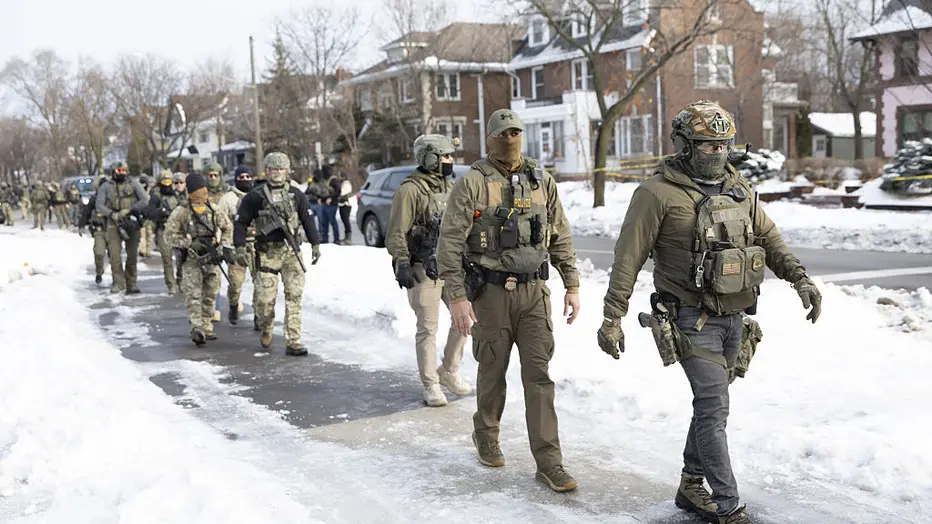
The label of domestic terrorist applied to a poet and mother is not accidental but a strategic expansion of the enemy category. Historically, fascist regimes always begin by targeting the most marginalized, including the undocumented, the stateless, and the racialized other. But the machinery of repression is never satisfied with a single target because it expands and requires new enemies to justify its continued existence and its ever-increasing budget. By branding a legal observer as a terrorist, officials like Stephen Miller and Kristi Noem are signaling that the protections of citizenship are now conditional. If you oppose the deportation machine, if you document its abuses, if you simply witness its violence, you forfeit your right to life and become an enemy combatant in the homeland war. The invocation of the Munoz incident serves to buttress this framing, suggesting that the war against immigrants is so dangerous that any hesitation, any observer, any deviation from total obedience is a threat to the troops. This is not law enforcement; it is a counter-insurgency operation directed at the local population. Residents report checkpoints, harassment, and kidnappings. In one chilling instance, Jose Roberto Ramirez, a twenty-year-old U.S. citizen, was stalked by masked agents at a grocery store, assaulted, and detained for hours despite his family presenting proof of his citizenship. An Uber driver at the airport was harassed by Gregory Bovino, a high-ranking Border Patrol official, simply for working while brown. These agents are not hunting violent criminals; they are terrorizing a community to enforce submission.
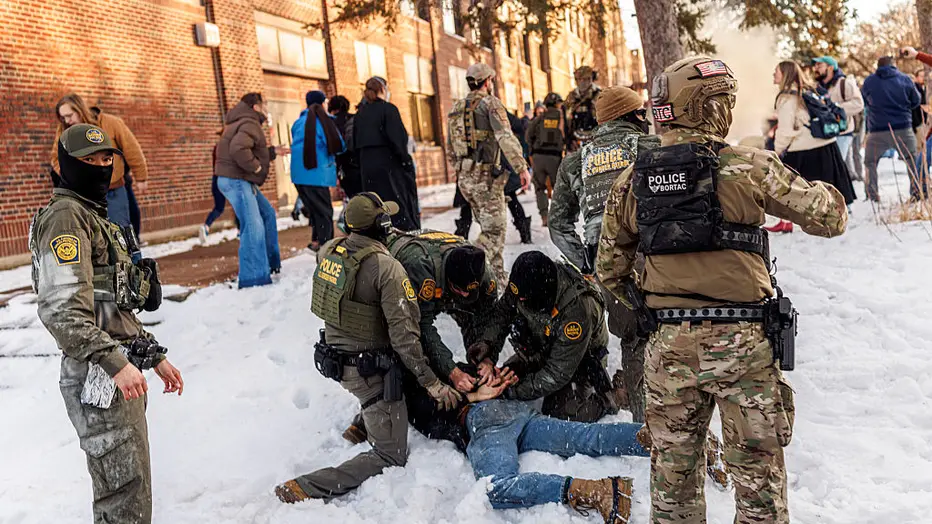
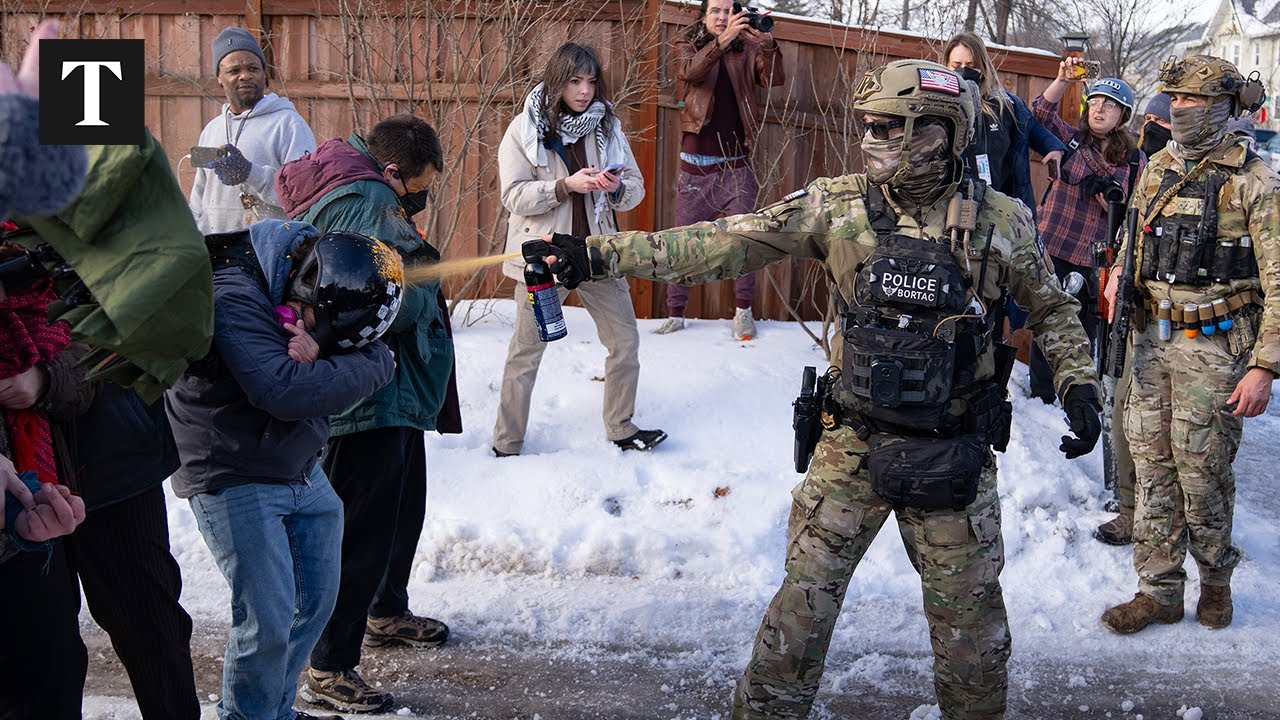
This war is now total. The incident in Minneapolis at Roosevelt High School, occurring on the same day as Good’s murder, demonstrates that there are no sanctuaries left. Border Patrol agents, heavily armed and armored, invading a high school campus to tackle students and staff, firing chemical munitions at parents, represents the complete militarization of daily life. Schools, theoretically spaces of learning and safety, are transformed into battlegrounds. The agents who assaulted the staff at Roosevelt High did not care that they were on school grounds or about the trauma they were inflicting on children. They operated with the swagger of an occupying army that knows it is untouchable. The terrifying reality is that, to them, Minneapolis is not a city of citizens to be served, but a territory to be pacified. The distinction between the schoolyard and the battlefield has been erased by a government that sees youth and education as potential sites of resistance that must be crushed.
We are witnessing the boomerang effect of imperialism that Aimé Césaire described. The techniques of domination, surveillance, and violence that were perfected in the colonies, in the occupations of Iraq and Afghanistan, and in the dirty wars of Latin America have been brought home. The armored vehicles rolling down Portland Avenue are the same ones that patrolled Fallujah. The tactical gear, the weaponry, and, most importantly, the agents’ mindset are imports from the imperial periphery. The American working class is now experiencing the sharp edge of the violence that their government has exported for decades. The ICE agent views the neighborhood of South Minneapolis with the same hostile gaze that a Marine views a village in a counterinsurgency operation. Everyone is a potential threat, and no one is innocent. The trauma of the agent, born of his role in the imperial machine, becomes the justification for inflicting trauma on the domestic population.
The response from the liberal political establishment reveals the utter bankruptcy of the Democratic Party in the face of this fascism. Figures like Mayor Jacob Frey and Governor Tim Walz offer rhetoric of outrage, but their actions betray a fundamental complicity. They speak of tragedy and investigations, but they continue to legitimize the very system that produced the killer. They warn the public not to take the bait and to avoid violence, effectively policing the reaction to the murder rather than stopping the murderers. Their primary concern is not justice for Renee Good but the maintenance of order. They fear the righteous anger of the people more than they fear the paramilitaries of the Trump regime. This liberal paralysis is rooted in a class alliance because ultimately, the Democrats and the Republicans serve the same masters. They are both parties of capital, and they both rely on the state’s monopoly on violence to protect property and enforce social hierarchy.
Walz calls up the National Guard not to expel the federal invaders, but to ensure that the protests do not threaten the stability of the local economy. The murder of Renee Good exposes the lie of the rule of law because there is no law that binds these agents. They are sovereigns unto themselves, answerable only to the executive power that unleashed them. The legal system, with its slow investigations and qualified immunity, is designed to absorb and dissipate the people’s anger, not to deliver justice. To expect the Department of Justice or the local prosecutors to hold these killers accountable is to expect the fox to guard the henhouse. The state cannot indict itself, and the murderer will likely be placed on administrative leave, paid by the tax dollars of the people he terrorizes, and eventually cleared of wrongdoing. This is not a flaw in the system; it is the system working as intended.
The framing of Good’s death as a result of her own panic, or as a consequence of the agent’s past trauma with Munoz, is particularly insidious because it erases the power dynamic of the encounter. Panic is a rational response to an irrational threat when armed men in unmarked cars swarm a lone woman. Panic is the biological imperative to survive, and to criminalize that panic is to demand that citizens submit to state violence with perfect docility. It is a demand for total obedience where the state asserts the right to kill you if you flinch. This is the logic of the slave patrol, modernized and bureaucratized for the twenty-first century. The demand that Good should have remained perfectly still while a masked man tried to drag her from her car is a demand that she consent to her own abduction. She refused, she tried to live, and for that refusal, she was executed.
We must also recognize the economic dimensions of this terror. The war on immigrants is a cover for a war on the entire working class. By creating a climate of fear, the state ensures that workers are too terrified to organize, too divided to strike, and too busy surviving to fight back. The spectacle of violence in Minneapolis is a message to every worker in America to keep your head down, do not intervene, and do not look the state in the eye. The violence is the point, and the cruelty is the disciplining mechanism.
The ecological crisis looms in the background of this bloodshed. As capitalism drives the planet toward collapse, resources become scarcer, and large populations are displaced. The hardening of borders and the rise of eco-fascism are the ruling class’s response to this crisis. They are building lifeboats for themselves and turning the rest of the world into a necropolis. The deportation force is a precursor to the forces that will manage future climate refugees. The violence we see today is a rehearsal for the genocidal management of the climate catastrophe. Renee Good was killed by the same system that is killing the biosphere.
In the face of this encroaching darkness, the usual avenues of recourse are closed because we cannot vote our way out of a police state. We cannot litigate our way out of fascism when the courts are packed with judges who share the ideology of the killers. The politicians are either complicit or impotent. The media, largely corporate-owned, parrots the police narratives, using passive voice to obscure agency and rhetoric to dilute the horror. Officer-involved shooting is the euphemism they use for murder, and clash is the word they use for a massacre. We must reject this language and the institutions that peddle it.
The only force capable of stopping this descent is the organized power of the people. We must look to the history of resistance for our roadmap and build networks of mutual aid and community defense that do not rely on the state. We need to unlearn the learned helplessness that liberalism instills in us because when the state abandons the social contract, the people are released from their obligations to it. We owe nothing to a government that shoots mothers in the face, but we owe everything to each other. The courage that Renee Good showed in witnessing the ICE invasion and refusing to look away is the seed of the resistance we need.
We must understand that the panic Renee Good felt was not weakness but the correct assessment of the situation. She saw the face of death approaching her window, and we should all feel that panic. We should all feel the urgency of a vehicle careening out of control. But we must channel that panic into cold, hard determination. We cannot afford to be paralyzed by fear. We must organize, disrupt the logistics of deportation, and make our cities ungovernable for the fascists. Every raid must be met with a blockade, and every arrest must be met with a swarm of bodies. We must become the friction in the machine.
The lie that she used her vehicle as a weapon is the final insult and a projection. The state uses everything as a weapon, including the law, the border, the economy, the media, and the gun. They weaponize poverty, race, and fear. And when a woman tries to use her vehicle to escape their weapons, they kill her and call it justice. We must not let this lie stand. We must shout the truth from every rooftop and write it on every wall. Renee Nicole Good was murdered by a coward with a badge, by a system that values property over life, and by a fascist movement that is currently occupying the White House.
The acceleration of the vehicle after the fatal shot is a haunting metaphor for our current moment. The driver is dead, the leadership is morally bankrupt, and the machine is hurtling forward, gathering speed, heading for a crash. The foot of the fascist state is heavy on the gas pedal of history. They want the crash because they want the destruction. They believe that from the wreckage, they can build their pure, white, authoritarian utopia. It is up to us to grab the wheel, slam on the brakes, pull the keys from the ignition, and dismantle the engine, piece by piece.
This is not a plea for reform because you cannot reform a death squad or a system that sees a mother in a car full of stuffed animals as a target for execution. This is a demand for abolition. Absolute, total, and immediate. The dismantling of DHS, the disbanding of ICE, and the disarming of the police. Anything less is an insult to the dead and ensures that there will be another Renee Good, and another, and another. The cycle must be broken, and the machine must be stopped. The accelerating car must be brought to a halt, not by a utility pole, but by the collective will of a liberated people.
The brutalization of our communities is the final desperate act of a system that has nothing left to offer but death. Capitalism has run out of markets, run out of time, and run out of excuses. All it has left is the gun. But the gun is a crude tool that can kill a person, but it cannot kill an idea. It cannot kill the desire for freedom or the love that binds a community together. The bullet that killed Renee Good passed through her body, but it lodged in the heart of the nation. It is a wound that will not heal until the system that fired it is destroyed.
The murder of Renee Good was a tragedy, but the revolution that follows will be her monument. The frantic movements of a dying woman’s vehicle have been twisted into a justification for state terror. We reject this distortion. We reject the eye that sees a weapon where there was only fear. We see the truth. We see the murder. And we see the enemy. The lines are drawn, and the sides are chosen. There is no middle ground on Portland Avenue. You are either with the woman in the car or you are with the man with the gun. Choose.
Sources:
- Renee Nicole Good, woman killed by ICE officer in Minneapolis, was originally from Colorado
- Who was Renee Nicole Good, the woman killed in ICE Minneapolis shooting?
- Thousands gather to mourn Renee Good, Minneapolis woman shot and killed by ICE agent
- Woman killed by ICE in Minneapolis originally from Colorado
- Minnesota governor says he is preparing National Guard amid furor over fatal ICE shooting
- Wikipedia
- What we know so far about the fatal ICE shooting of a Minneapolis woman
- The Cost of Staying Human
- CNN Live Coverage
- What we know so far about the ICE shooting in Minneapolis
- Countering Domestic Terrorism and Organized Political Violence
- How NSPM-7 Seeks to Use “Domestic Terrorism” to Target Nonprofits and Activists
- Trump’s Orders Targeting Anti-Fascism Aim to Criminalize Opposition
- How Governors and Mayors Can Protect Nonprofits from Trump’s NSPM-7
- Practical Advice for Nonprofits and Donors After the Presidential Memorandum on “Countering Domestic Terrorism and Organized Political Violence” and Reported IRS Enforcement Changes
- DOJ Issues Sweeping New Domestic Terrorism Directive: What the Attorney General’s December 4 Memorandum Means for You
- ‘Stakes Are High:’ Big Law Alerts Clients on Trump’s Domestic Terrorism Order
- North America: Federal strategy on domestic terrorism includes focus on nonprofit foundations, entities, and individuals
- Donald Trump’s NSPM-7 Follows Domestic and International Trends In Stealth Authoritarian Power Grabs
- Labeling dissent as terrorism: New US domestic terrorism priorities raise constitutional alarms
- Legal Analysis Surrounding the Death of Douglas Claiborne on July 27, 2021
- 2025 Minnesota Statutes 609.66 DANGEROUS WEAPONS.
- ICE agent who opened fire on Renee Good was dragged, hospitalized last year
- Star Tribune identifies ICE agent who fatally shot woman in Minneapolis
- ICE Agent Who Shot Renee Nicole Good Identified as Jonathan Ross
- We talked to 5 use-of-force experts. This is what they say about the Minneapolis ICE shooting.
- Breaking Information on Jon Ross on Xcancel